Managing Heat and Fatigue During a Full Day at a Gun Show
While gun shows may seem like a relatively simple event to attend, a full day of browsing at tables of guns and gear can quickly add up to a lot of walking, standing, conversation and decisions made while tired. So, in order to make the best of his planned all-day event, Marcus plans to treat his comfort and alertness the same as he would treat gun show safety – as very important details that need to be taken care of before he becomes worn out.
Start with a plan that leaves room to pause
Know before you go! Review all the event details on the organizers' website, as well as the latest guidance from official government authorities, to get the very latest information on opening times, floor plans, parking and what you can bring with you in a bag.
Set out a list of what you want to do whilst at the show. For example to compare a few different types of ammunition to see which are best for your needs, to ask questions about servicing and parts for your guns, or to ensure you stick to a certain budget. Having a list of what you want to do throughout the day will help to shape the day to suit your needs, rather than rushing from stall to stall.
Don't wait until you are tired until you take your break. Plan your breaks ahead of time so that you can take them before you are so irritable, dizzy, or lack of concentration that it will effect your safety and your decision making ability.
Treat heat as a planning problem, not a surprise
You may feel the effects of heat before you even enter the exhibit hall. In addition to time spent walking from distant parking spaces, waiting outside of the exhibit hall, and walking through crowded aisles leading to entrances, there is time spent in your car and out in the sun while traveling to and from the show. The venue itself, whether an air-conditioned building or not, is not the only factor to consider with regards to heat.
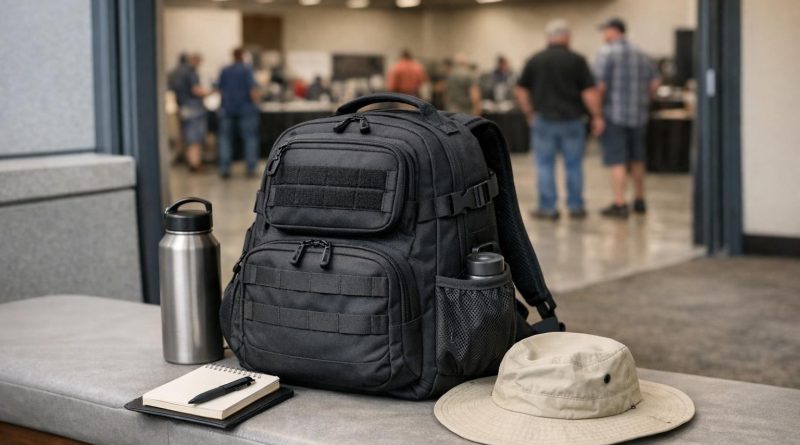
Marcus knows the venue will likely be hot, but he also knows that the parking lots and outdoor lines will be even hotter. He knows the time he spends in his car will add to his fatigue, and the time he spends waiting outside for the doors to open will also be spent in the sun. For that reason, he will bring a hat to protect his face from the sun, but it must be something that will not get in the way of him being aware of his surroundings, and will have to check with the venue in advance to see if it will be allowed.
Early signs of heat stress are often mistaken for other minor ailments such as unusual tiredness, headaches, thirst, feeling irritable, skin becoming clammy and not being able to concentrate. As soon as any of these signs are recognized Marcus will cease all activity and move to a cooler location. If required he will ask for his companion to call for assistance. However, if he becomes confused, feels faint, becomes severely weak, etc. he will seek immediate medical assistance. It is also important to bear in mind the visitor's personal health and any medications that they may be taking and to seek advice from a qualified medical practitioner.
Hydration works best before the afternoon slump
Don't wait until you feel so tired and thirsty that you can't think straight anymore and then search for a place to buy more drink. Replenish your stock of water throughout the day, and also eat sufficient amounts of food to avoid feeling weak and worn out later on in the day.
Rather aim to eat enough to stop yourself from getting shapely and feeling weak. Do not eat loads but aim for a huge balanced and healthy meal to keep you going for the rest of the long day. Do not try new foods as you do not know how they will affect you throughout the rest of the long day.
Some things to note on the consumption of alcohol, and of caffeine, and how these may affect a person's ability to be alert and safe throughout the day. As has already been mentioned, drink and food will be available throughout the day but it is generally best to avoid the consumption of alcohol while endeavoring to be vigilant throughout the day. The visitor must note also the venue's rules with regard to the bringing in of alcohol. Caffeine is another substance that can affect a person's sleep, make them feel more anxious than usual and can also raise a person's heart rate. This means that whilst it may seem like a good idea to have some before the day starts, it must be consumed with caution and not used as a substitute for water, food and rest.
Choose footwear and clothing for the actual distance
The best shoes for a long day of visiting events are the ones you have already tested on longer walks. Don't wear new shoes to an event. Look for shoes that don't rub or pressure your feet in any places and don't have soles that you have not yet tested. A single 'hot spot' can become very sore by the end of the day.
Pack light. Choose something with secure pockets and remove anything he doesn't need. If it is permitted by the venue then a small, secure bag may be the best option. Loose pockets, dangling straps, and an overburdened backpack can all cause more problems than they solve, even outside of the crowded floor of the event.
Marcus selects clothing that allows for ease of movement and will assist in warming and cooling down as required. In addition to this he can bring items such as blister pads and any personal medications that he requires.
Protect attention when decisions become tiring
After a few hours of hassle checking out the various products and talking to the sales staff, you may start to get a little worn out and begin to rush your way through the remaining conversations, possibly even forgetting what was on offer at certain tables. Therefore, all of the information that you gather whilst out and about on the day can be written down in notes on your phone or even just simple hand written notes on paper, which can then be reviewed at a later time in a more comfortable and peaceful setting.
Marcus would ensure that in his excitement for looking at various models of equipment that he does not handle it carelessly. He would wait to be given permission to look at equipment, follow the instructions of staff at tables, and wait to be told by staff what he can do with regard to transport, handling and purchasing of equipment at the event.
A useful rule when extremely tired is to ask someone else to make a decision of significance. Go back to somewhere quiet, have a snack, rehydrate and review your notes from the day. It's a lot easier to be clear headed and make good decisions when you are not exhausted. A polite question to clarify a point is better than a guess. Don't feel pressured to make a purchase if you're extremely tired – leave and come back another day.
We take a final look for any personal items, we thank everyone for their time and we head off home. A long day but we got lots done and felt informed, able to travel home safely and made all the decisions we had intended to make.